The deck most people call “Rider-Waite” was drawn by Pamela Colman Smith, and her PCS monogram still hides in the corners of the cards.
London, Jamaica, New York
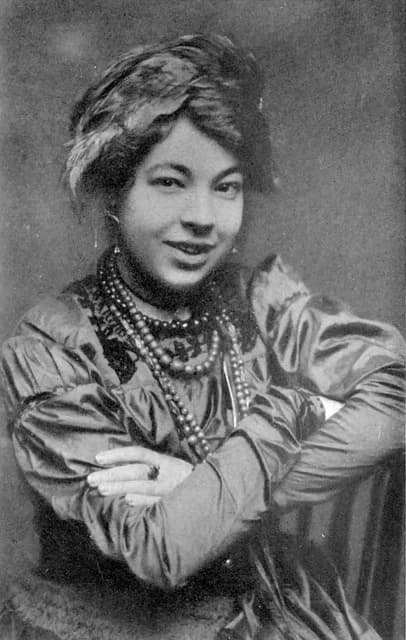
She was born on 16 February 1878 in Pimlico, London, to American parents. Her grandfather, Cyrus Porter Smith, had been mayor of Brooklyn, and her uncle, Samuel Colman, was a painter. Around 1889 her father took a job in Jamaica, and the family went with him. In 1893 she enrolled at the Pratt Institute in New York, where she studied under Arthur Wesley Dow. She left around 1897 without a degree.
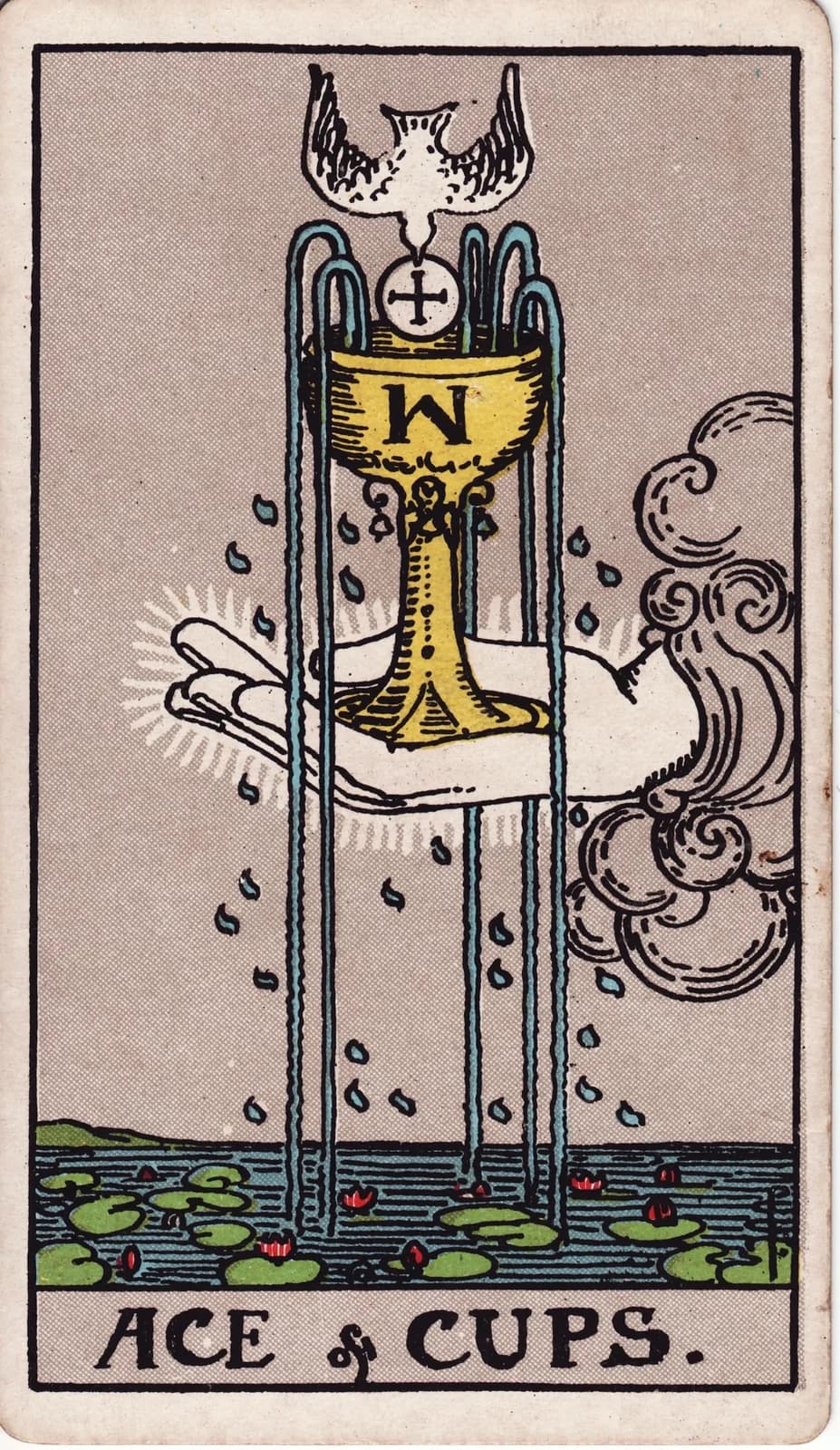
The Stage, the Stories and a "Mad Room"
From 1899 she worked with Henry Irving and Ellen Terry's Lyceum company, and in 1899–1900 she toured America with them, drawing illustrations and making costumes. The same year she published Annancy Stories; Chim-Chim followed in 1905. The theatre shaped her deeply, and in 1908 she said so plainly: "The stage has taught me almost all I know of clothes, of action and of pictorial gestures."
From 1903 she edited a little magazine, The Green Sheaf. It ran to thirteen issues, and every picture in it was coloured by hand. Afterwards she opened a hand-colouring shop and published under the name Green Sheaf Press. Her London home was known for its evenings. In Bohemia in London (1907), the writer Arthur Ransome describes one of them, giving her the alias "Gypsy." He recalls arriving at her door: "We left our hats and followed her into a mad room out of a fairy tale. As soon as I saw it I knew she could live in no other." He calls her, affectionately, the "god-daughter of a witch and sister to a fairy." That is a friend's teasing tribute to her gift as a storyteller, not a description of who she was.
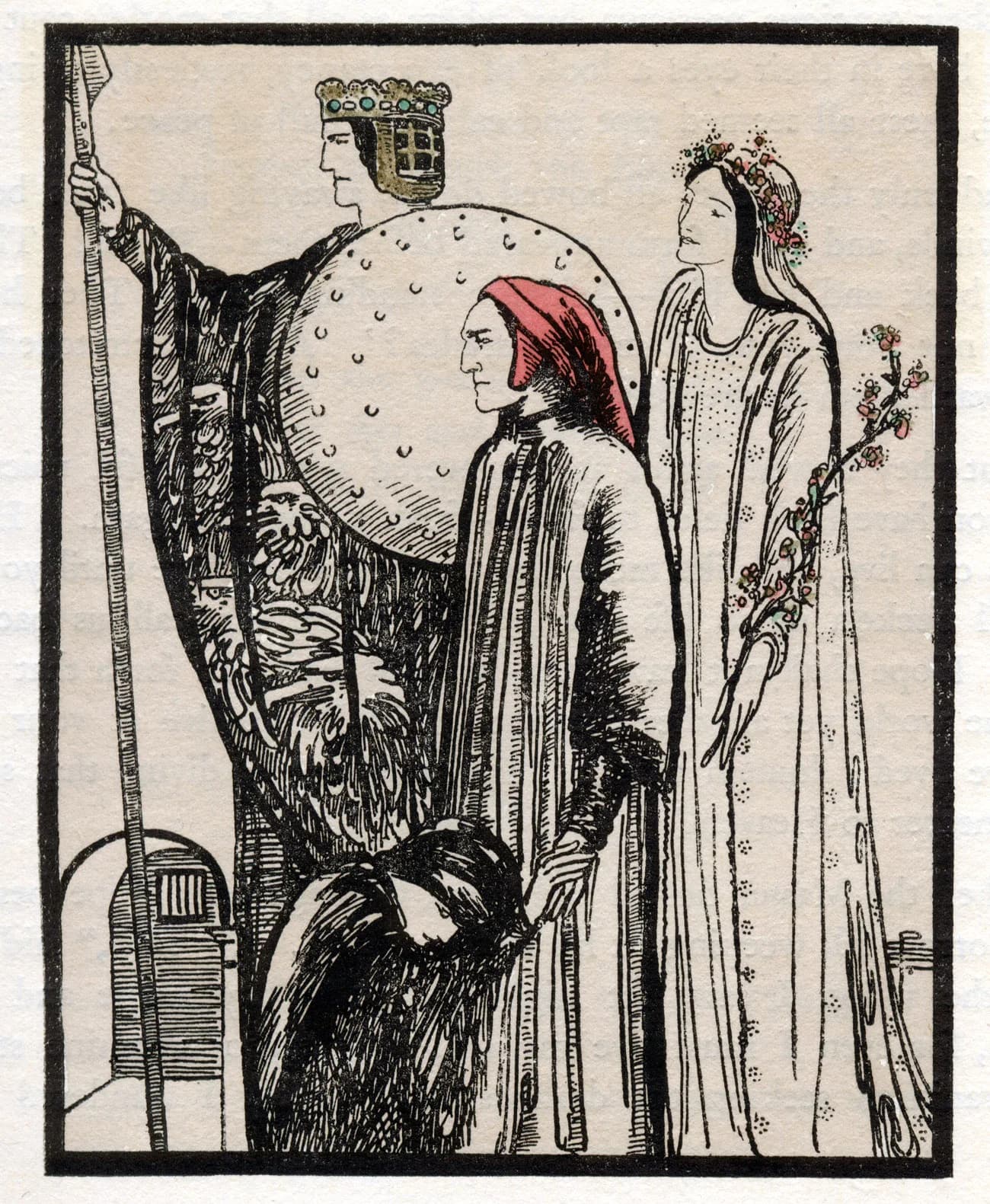
What She Said She Saw
The strangest thing about her, and the most beautiful, is that she painted music.
In 1908 she explained it herself to The Strand Magazine, in a piece called "Pictures in Music." Her paintings, she said, "are not pictures of the music theme... but just what I see when I hear music." Then she described how it began: "When I take a brush in hand and the music begins, it is like unlocking the door into a beautiful country."
And what was in that country? She gave an example: "Often when hearing Bach I hear bells ringing in the sky, rung by whirling cords held in the hands of maidens dressed in brown." The same year, writing for art students in The Craftsman, she put the idea more simply: "sound and form are more closely connected than we know."
You can still see one of these journeys. Overture. "Egmont" Beethoven (1907), painted as she listened to Beethoven's overture, now belongs to the Smithsonian American Art Museum.
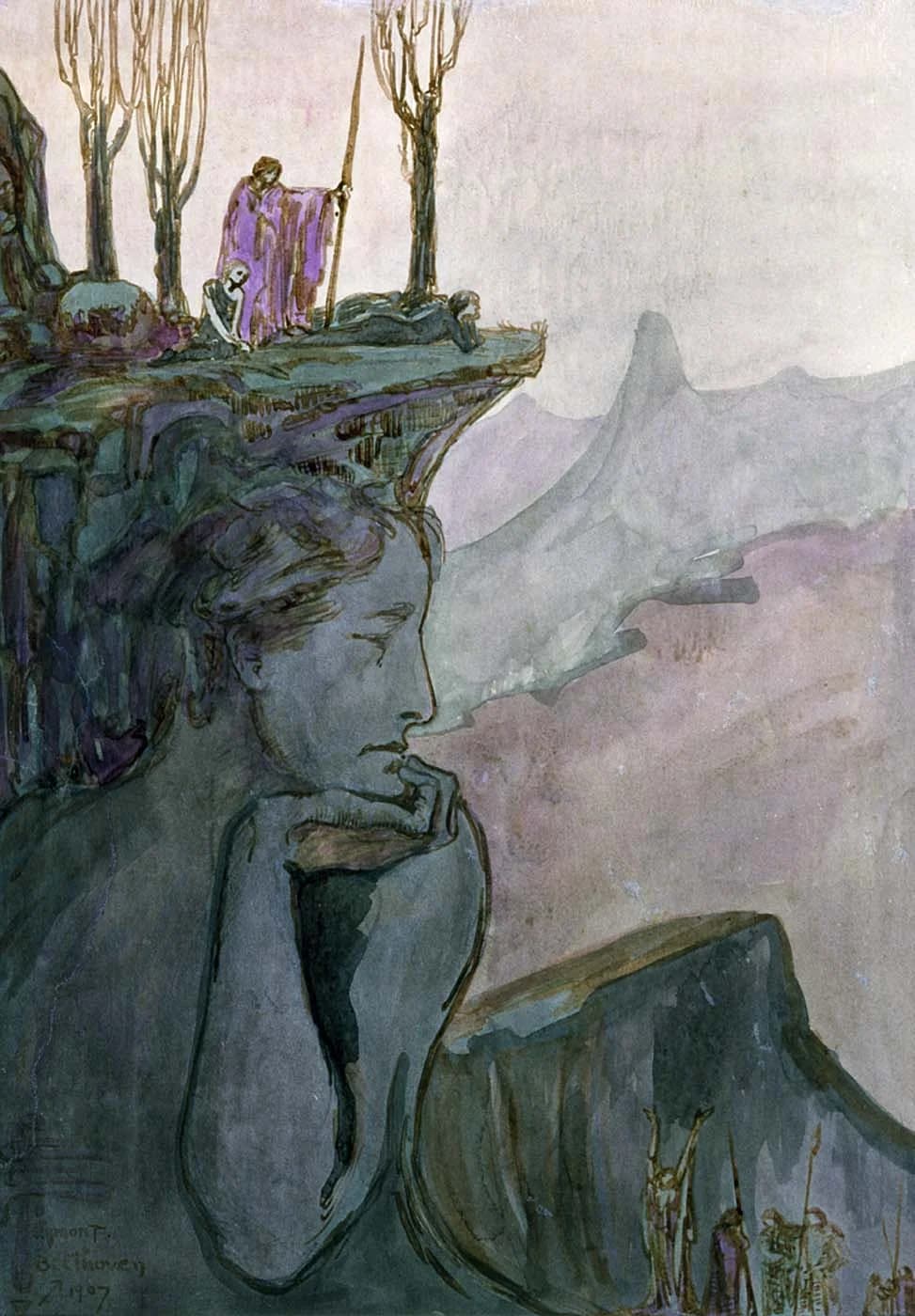
According to a journalist writing in The Craftsman in 1912, "She sees music, rather than hears it." The same article says that "from childhood she has had the gift of the 'second sight,'" and that "most often in Ireland she saw the Sidhe," the fairy people of Irish legend. Asked why she painted them so radiant and tall, "she answers simply that it is the way they look." Later scholars have used the word "synaesthesia" for her. That is their term, not hers.
What follows is imagined. The lamps are lowered and the music starts. She sits in a corner with paper across her knees, and her brush never stops. Everyone else is listening; she is looking. A phrase climbs, and a ridge of distant hills rises on the page. The bass drops, and the sea darkens with it. When the piece ends she looks up, as if she has come back from somewhere far away.
In January 1907 the photographer Alfred Stieglitz gave her a show of 72 works at his 291 gallery. It was the first time the gallery had shown anything other than photographs, and she went on to have two more shows there. Not bad for a young illustrator who had left art school without a degree.
Waite Comes Calling
Around 1901 she joined the Hermetic Order of the Golden Dawn. Some years later Waite, a fellow occultist, wanted a new tarot deck and asked her to draw it.
Waite's 1910 book says the cards were "drawn and colored by Miss Pamela Colman Smith." Decades later he remembered her as "a most imaginative and abnormally psychic artist," working under his "proper guidance." That is Waite's version. How much he directed and how much she invented, nobody can now say.
Eighty Designs, Very Little Cash
On 19 November 1909 she wrote to Stieglitz. The letter is now at Yale's Beinecke Library. Almost in passing, she mentioned that she had just finished a big job for "very little cash," a set of designs for a pack of tarot cards, "80 designs." Then she turned to practical matters: "I shall send some over — of the original drawings as some people may like them! — I will send you a pack — (printed in colour by lithography) — (probably very badly!) as soon as they are ready — by Dec. 1 — I think —" She hoped New York buyers might want the originals.
Rider published the deck that December, and the following year Waite's small companion book, The Key to the Tarot, appeared alongside it, later expanded as The Pictorial Key to the Tarot. No record of what she was paid survives. The pack she feared would be printed "probably very badly" went on to accompany generations of readers.
Turning the Minor Arcana into Theatre
The deck's real revolution is in the minor cards. Before 1909, the numbered cards of a tarot deck usually just showed their suit symbols in a row: five cups were five cups. Pamela Colman Smith tarot cards are different. She turned all 78 into scenes with people in them. On the Five of Cups, a cloaked figure mourns the cups that have spilled. On the Ten of Wands, a man bends under his load and trudges toward a distant house. Every card looks like a play caught halfway through.
Some researchers think she may have drawn on the Sola Busca tarot, an Italian deck. A full set of photographs of it entered the British Museum in 1907. She very likely saw them, and some of her minor cards do resemble it. This is the researchers' view, though; she never mentioned it herself.
Because every card is a picture, beginners find this deck easy to read. Draw a card here and see what story it tells you, or try reading three cards together as one scene.
Who Are the Faces on the Cards?
Some have guessed that her figures had real-life models, but accounts differ. The Queen of Wands is said by some to be Ellen Terry and by others to be Edith Craig. Others have guessed that the dancer on the World card is Florence Farr of the Golden Dawn. None of these guesses comes from her.
The PCS Hidden in the Corner
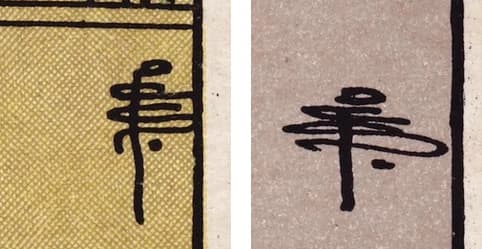
Turn up the Ten of Wands and look at the bottom-right corner. Then do the same on the Three of Swords, beside the falling rain. Each has a small mark that the V&A describes as an "interlaced P, C and S." It is her monogram.
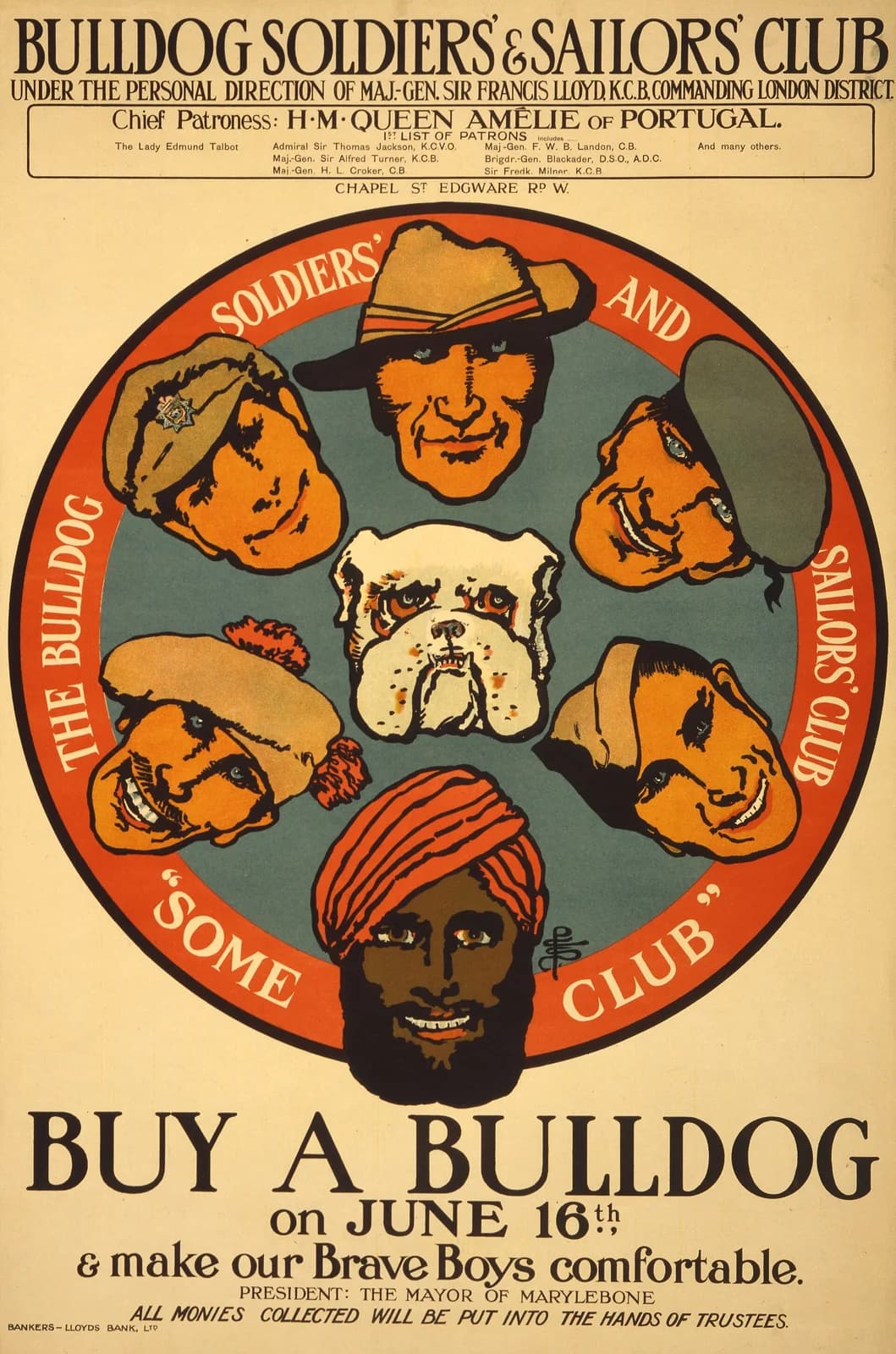
She used it for years. It appears on the six colour plates she painted for Bram Stoker's The Lair of the White Worm (1911), a book that never printed her name. It also appears on a 1915 wartime charity poster, Buy a bulldog…, now in the US Library of Congress. Claims that it was a secret act of resistance or a copyright watermark have no evidence behind them. It is simply an artist signing her work.
Later Years
In 1910 she designed postcards for the suffrage group Suffrage Atelier. In 1911 she became a Catholic. After the First World War she moved to the Lizard peninsula in Cornwall, where she and her friend Nora Lake ran a holiday house for Catholic priests. She spent her last years in Bude and died on 18 September 1951 (some sources say the 16th). She left little in the way of money, and some debts, and her grave can no longer be located. What she did leave is in the hands of almost everyone who has ever shuffled a tarot deck.
Legend has it that drawing the cards drained her spiritual strength, and that this is why her last years were poor. Many readers today prefer another way of seeing it: she gave the tarot its life, and that was a great gift in itself. In reality, the disaster of the legend never came. She simply lived out her life in Bude.
A Name Left Off the Box
The deck came to be called "Rider-Waite," after a publisher and a writer, with no mention of the woman who drew it. For a long time people knew her pictures better than her name. That is changing. The 2009 centennial edition is called the Smith-Waite Centennial, and in January 2026 The New York Times gave her an obituary in its "Overlooked" series. Her name is now being remembered alongside the pictures that made it worth remembering.
Next time you lay out a spread, look in the corners for those three letters. They are her way of saying: I drew this.
Sources
Try it with a clear idea of what to expect.
Draw a card on the tarot table