A large garden and a very small snail
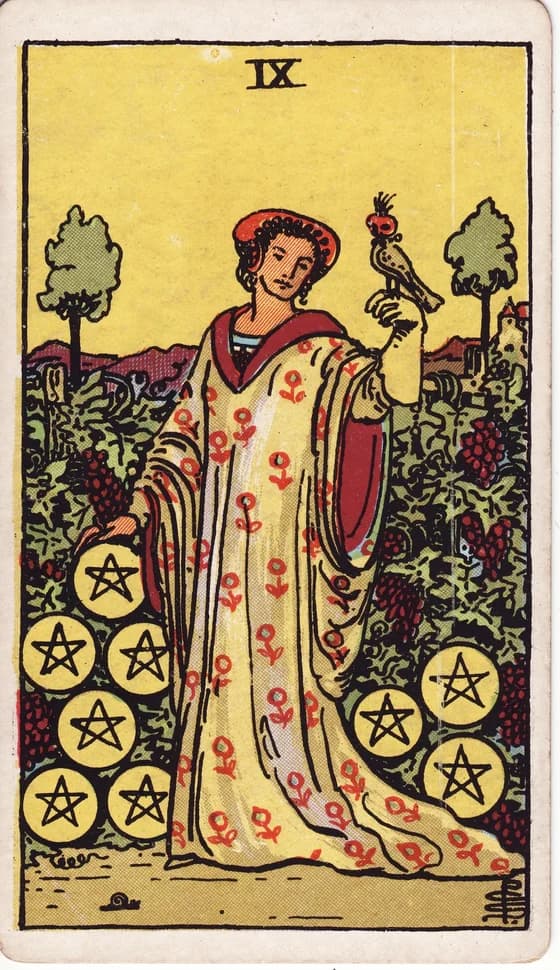
A figure in a pale-yellow robe stands among grapevines. Red patterns repeat across the robe, and a red headpiece covers the head. The hand on the left rests near the pentacles and leaves; a bird stands on the raised, gloved wrist on the right, wearing a red hood. Nine pentacles sit on either side of the body: six to the left and three to the right.
Purple grapes hang from the vines, with two tall trees and buildings in the distance. A tiny snail appears on the pale-yellow ground before the figure. It may prompt reflection on pace, but claiming that it has a fixed secret meaning goes beyond observation and would need another source. View the card image
Waite leaves ownership of the estate uncertain
Waite describes a manorial garden, abundant vines and a bird on the wrist. He says the estate may belong to the figure, suggesting material well-being. His meanings include prudence, safety, success, accomplishment and discernment. He does not establish the source of the wealth or the person's marital status.
Reversed meanings concern deception, bad faith and an unrealised project. This article uses them to question the reliability of apparent achievements, while developing modern themes of autonomy and appreciation from the picture. Clothes and gender do not determine who can possess these capacities. Check Waite’s text
Upright Let achievement become part of daily life
The upright card can help you recognise abilities you have developed. Something once difficult may now feel manageable; a space may finally suit you; daily life may offer more choice. Acknowledging those changes does not prevent further growth.
You can also practise identifying your own preferences. What genuinely feels good may be neither expensive nor impressive to others, and need not match their definition of success. Returning to actual experience helps you distinguish achievements worth maintaining from burdens kept for appearance's sake.
Reversed What is taking away your ease?
The reversal can reveal a gap between appearance and experience. Others see polished results, while maintaining them leaves you no rest. Or each improvement immediately becomes another comparison, allowing no contentment. Acknowledge the cost before deciding what to change.
If the issue involves another person's promises or an uncertain source of apparent success, check the actual information. Waite's theme of deception can prompt verification, but cannot establish that someone is lying.
Take some life back from achievement
After finishing a long-term piece of work, allow time to use, show or revisit it instead of immediately erasing its significance with a higher target. On a day alone, choose what you actually want to do rather than making the schedule look enviable.
Keeping separate interests and space within a relationship can make being together more comfortable. Independence does not require rejecting intimacy, and accepting company need not mean giving up autonomy.
Practice Notice something that is already enough
Write down three conditions in your life that have genuinely improved and schedule time to enjoy one. Then ask what reasonable upkeep would preserve it. Distinguish maintenance from endless upgrading, and notice whether satisfaction becomes easier.
Common misreading
The Nine of Pentacles is not proof of wealth, singleness or membership of a particular class. Nor does it mean every achievement was made alone. It can support reflection on autonomy and satisfaction, but cannot establish another person's finances, relationships or worth.
Sources and image
The image was drawn by Pamela Colman Smith. The source manuscript was based on inspection of the standard 500px thumbnail listed on the file page; version details come from the Commons file page.
The historical discussion follows this card’s English entry in Part III, Section 2 of A. E. Waite’s The Pictorial Key to the Tarot. The source is the English transcription labelled [1911] by the Internet Sacred Text Archive. A physical 1910 first edition was not checked for this batch. The everyday situations, questions and exercises are original modern reflections, not direct translations of Waite’s book.