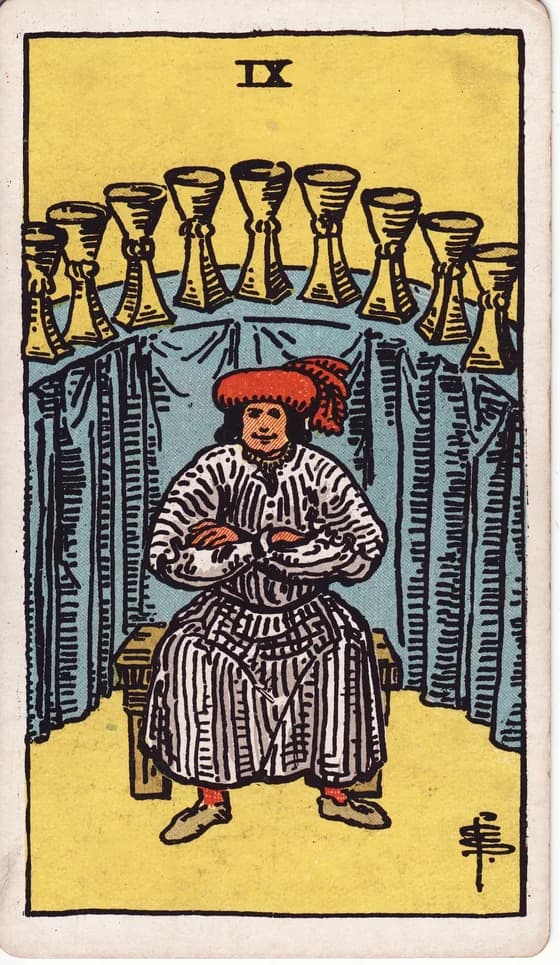
Nine cups are arranged behind the seated figure
Against a yellow background, a red-hatted figure sits on a plain wooden bench, arms crossed and feet set apart, with a slight smile. Dark fold lines mark the pale clothing. Behind, a high counter is draped in blue fabric, with nine golden cups arranged along a curve.
The cups resemble displayed achievements, yet the figure holds none of them. The bench is simple, and no companions appear. Folded arms also occur in the Four of Cups, but the setting, expression and orderly display differ here. One gesture alone cannot make both cards signify the same withdrawal. View the card image
Waite’s satisfaction includes a material aspect
The 1911 English transcription of Waite’s The Pictorial Key to the Tarot describes someone who has feasted contentedly. It notes that the picture shows the material side and lists satisfaction, comfort and success among its meanings. That passage cannot establish a real-world guarantee that wishes will come true. Waite’s entry for this card
His reversed entry includes truth, loyalty and liberty, while acknowledging readings involving mistakes and imperfections. The emptiness and excessive pursuit of approval discussed below are modern ways this site examines satisfaction, not the single traditional reversal.
Upright: Be specific about what satisfies you
Upright, the card can help you stop rushing and recognise what is already done. Completing a piece of work independently, making your home comfortable or finally finding time for a hobby can be satisfying without waiting for anyone else to award a prize.
Enjoyment need not be expensive or reserved for grand achievements. Naming what pleases you helps you arrange similar experiences again, rather than leaving a brief burst of excitement followed only by more buying or comparison.
Reversed: Distinguish comfort from filling a gap
If the achievements look impressive but you do not feel happy, ask whose needs they satisfy: yours or other people’s expectations? Perhaps you gained recognition but lack rest, or met a numerical target without making something you actually like.
Another direction is enjoyment losing proportion, such as continually increasing a reward to preserve the same feeling. Look at actual time and budget without punishing yourself with shame. Fluctuating satisfaction does not mean you have lost the capacity to enjoy life.
Know what you are celebrating
After completing a course, do not rush to buy the next one. Use a skill you have learned, recognise the result, then decide on the next stage.
If friends praise your lifestyle, ask which parts you also genuinely enjoy. For a weekend treat, choose an activity you actually look forward to and set a spending amount beforehand. A pleasurable experience need not be tied to the pressure of overspending afterwards.
Practice: Make an enough list
List three things that are currently sufficient or satisfying, explaining the practical benefit of each. Choose one standard that comparison keeps pushing upwards and set a temporary enough point. On reaching it, stop to experience the result instead of immediately adding new demands.
A common misreading
The Nine of Cups does not guarantee lottery wins, wealth or fulfilled wishes, nor does it make a satisfied person selfish. It can illuminate personal enjoyment without replacing judgement about resources and responsibilities. You can be genuinely content while knowing that parts of life still need care.
Read alongside
Seven of Cups: Distinguish imagined acquisition from real experience; Ten of Cups: Compare personal satisfaction with security in shared life.
Sources for this article
- Pamela Colman Smith: Nine of Cups, Commons Pam-A scan
- A. E. Waite, The Pictorial Key to the Tarot, Part III §2, Nine of Cups
Edition note: the text was checked against the English transcription at Sacred Texts labelled [1911]. The image is the scan currently labelled Pam-A on Commons. The modern situations, questions and exercises were written originally by DestinyPixel. Historical divinatory terms are learning material, not predictions or evidence about real events.