The cups are close, but the arms do not reach out
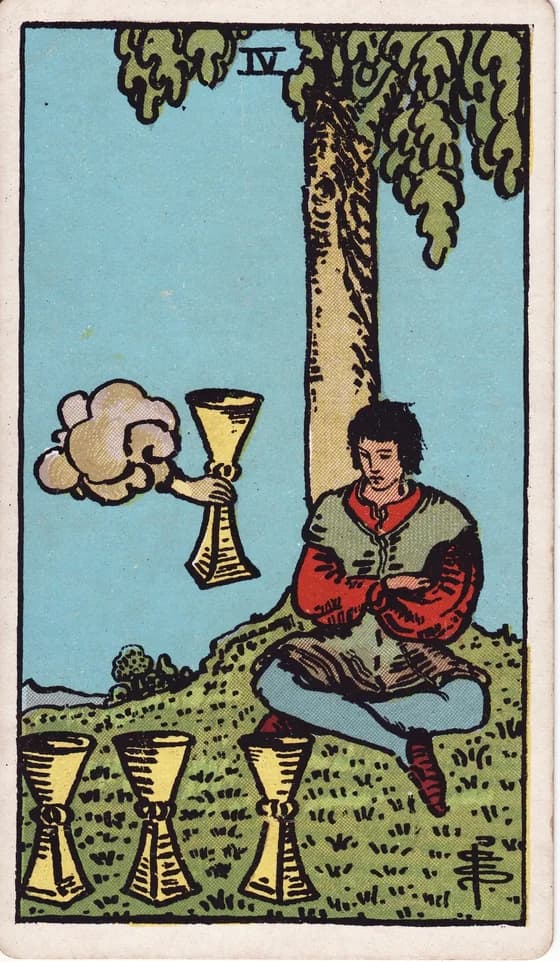
A figure sits on a slope beneath a tree, arms folded, legs crossed and head slightly lowered. A green outer garment covers red sleeves, with the trunk directly behind. Three golden cups stand on the grass in front; a hand emerges from a cloud on the left to offer a fourth.
All four cups remain upright. The figure neither takes one nor knocks one away. Low shrubs and distant hills appear behind. A withdrawn posture alongside continuing offers from outside is visible in the picture. Whether the person is resting, hesitating or rejecting the offer still requires interpretation; posture alone cannot decide it. View the card image
Dissatisfaction in the text and new relationships in the reversal
The 1911 English transcription of Waite’s The Pictorial Key to the Tarot describes dissatisfaction with the surroundings, using weariness, aversion and boredom after satiety to explain the upright card. The wording is judgemental and should not be applied directly to someone who is exhausted. Waite’s entry for this card
The historical reversed entry names novelty, new instruction and new relationships. This article therefore treats renewed attention to the outside world as its main reversed theme. Using the upright card to identify needs and preserve choice is this site’s modern extension.
Upright: Ask why you do not want it
Lack of interest may mean too much is being asked of you, or that the available options do not fit. Notice whether everything feels tiring or only this particular kind of arrangement. Then decide whether to rest, decline or try something different.
A pause is useful when you know what you will observe afterwards. Allow a defined period of recovery, then revisit the options. That makes changes in your needs easier to see than endlessly saying you will think about it later.
Reversed: Let interest return gradually
The reversal can suggest willingness to reconnect: a short meeting, a trial class or a closer look at an offer you set aside. New interest need not immediately become a long-term plan. Ask for details before deciding how much to commit.
If fear of missing out is driving a string of yeses, more activity may not bring more enjoyment. Small trials you can leave help you understand yourself while keeping renewed participation separate from renewed exhaustion.
Assessing opportunities and invitations
If a colleague invites you into a project, ask how much time it needs and what the tasks involve. You may be resisting an undefined burden rather than the project itself. With better information, you can still decline or propose a smaller contribution.
If you do not want to socialise on a day off, say you would like some quiet time. If you miss your friends a few weeks later, start with a short walk. If nothing seems interesting in creative work, step away from reference material and record one thing in daily life that genuinely catches your attention.
Practice: Make the refusal specific
Choose one invitation or plan you have set aside. Write what it actually asks of you, why you are unwilling, and which change would make you reconsider. If no change would make you want it, a clear refusal is also a completed decision.
A common misreading
The Four of Cups cannot label someone lazy, cold or mentally ill, and every offered cup need not be a precious opportunity. The image can help you ask questions. If physical or emotional difficulties continue to interfere with daily life, real support and suitable professional assessment matter.
Read alongside
Ace of Cups: Compare willingness to receive with a temporary lack of interest; Eight of Cups: Distinguish a short pause from a decision to leave.
Sources for this article
- Pamela Colman Smith: Four of Cups, Commons Pam-A scan
- A. E. Waite, The Pictorial Key to the Tarot, Part III §2, Four of Cups
Edition note: the text was checked against the English transcription at Sacred Texts labelled [1911]. The image is the scan currently labelled Pam-A on Commons. The modern situations, questions and exercises were written originally by DestinyPixel. Historical divinatory terms are learning material, not predictions or evidence about real events.